Should Your Child Take a Lesson Every Day at an After-School Program?
 bot@flaur.jp
"If my child is going to an after-school program with lessons included, I want them to take a lesson on every day they attend."
When choosing an after-school program, that is a natural way to think. If your child can learn calligraphy or soroban (abacus) inside the program, you no longer need to drive them to separate lessons. You want them to use their after-school hours to build study habits and find more things they are good at. Craftsman After School offers lessons for exactly that reason: to create those opportunities for children.
At the same time, we also value free time after school, when children can choose for themselves how to spend it. That is why, in our 2-day and 3-day plans, the number of days a child attends and the number of lessons included in the basic fee are different.
Why do the 2-day, 3-day and 4-day plans have fewer lessons than attendance days?
In our regular course, the 2-day-a-week plan includes 8 days of attendance per month, with up to 4 lessons per month included in the basic fee. The 3-day-a-week plan includes 12 days of attendance per month, with up to 8 lessons. The 4-day-a-week plan includes 16 days of attendance per month, with up to 12 lessons. If a child on the 3-day plan takes one lesson per day, 8 of the 12 days have a lesson, and on the other 4 days they can relax at the after-school program.
You may wonder, "What do children do on days without a lesson?" At Craftsman, children start with their homework when they arrive. After that, they play with friends, make things, or talk with the teachers. Children often start talking about what happened at school on their own, after snack time or in the middle of play, even when there is little time to ask about it at home.

Not too many plans, precisely because we want to build study habits
Sticking with a lesson they like and feeling "I can do this better than before" is a happy experience for a child. Yet the same child has days when they were tense at school, or days when they want to play with friends right away. What adults see as "just the usual lesson" can feel to a child, on that day, like "one more thing to push through."
If the feeling that "a day at Craftsman is always a day of working hard at something" goes on, a child may lose interest in lessons, or start to feel "I don't want to go to the after-school program today." A schedule filled with the goal of building study habits may, for some children, make it harder to keep learning.
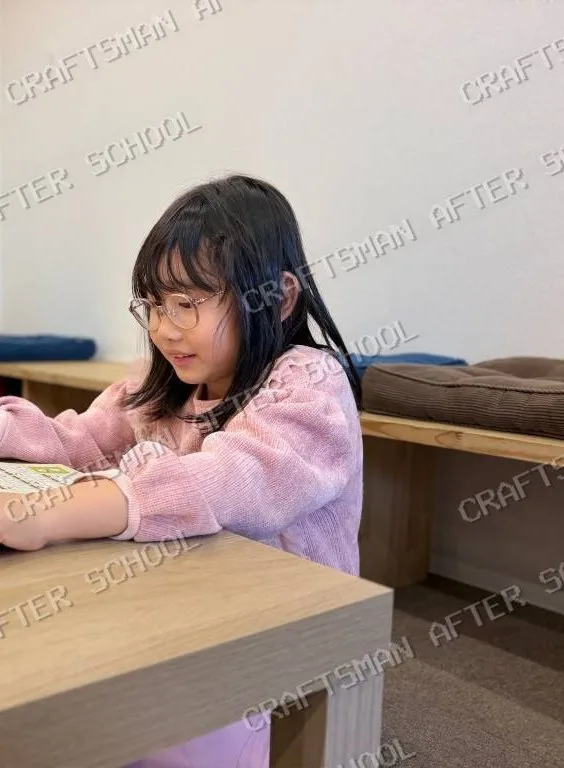
The operating guidelines for after-school children's clubs from Japan's Children and Families Agency also treat rest and self-initiated play as an important part of after-school life. A report from the American Academy of Pediatrics also describes play as an opportunity for children to develop the ability to relate to others and to manage their feelings.
Free time after school lets teachers see more, too
What I value when I watch children on site is their everyday side, which is hard to see during a lesson.
For example, when a child in the middle of building with blocks asks, "How can I make this part?" I could show them how right away. But when there is time, I can ask, "What have you tried so far?" and think it through with them. If a child seems to want to join a group that is playing, I can wait a little for them to speak up, or go over to them if they seem stuck.
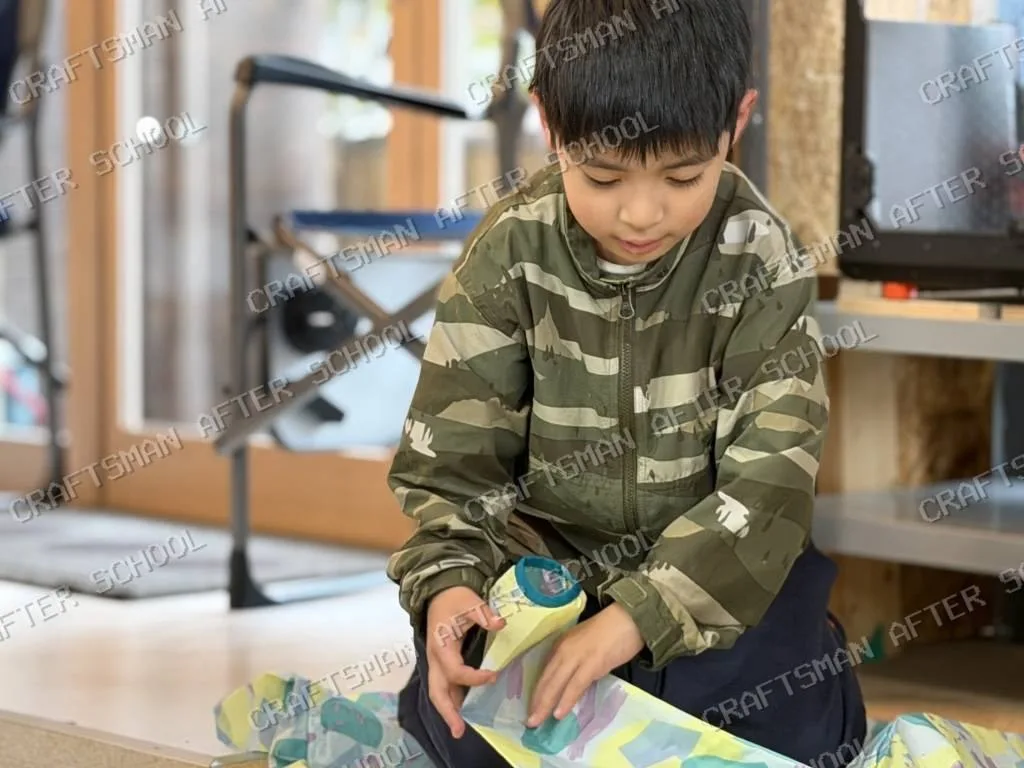
This kind of support cannot be written into a timetable. What a child wants to do, and where they are stuck, only becomes clear by spending time together. As the people who run the program, we want to leave time in the schedule for teachers to listen to children and lend a hand when needed.
Summary: when choosing lessons, days with nothing planned are fine too
If you are unsure which plan to choose, start by asking your child two things: "What do you want to try?" and "What do you want to do on an afternoon with nothing planned?" If you hear something like "I want to try soroban, and on other days I want to play with my friends," that alone is a helpful clue for choosing which days to attend. For younger children who have not yet decided what they want to do, attending Craftsman steadily, such as 5 days a week, is also a good option.
There are days when a child gets a little better at calligraphy, days when they continue a craft with friends, and days when a teacher listens to their stories about school. So that children can keep learning while looking forward to coming back tomorrow, Craftsman After School in Kitayamata, Tsuzuki Ward, Yokohama values this free time after school.
Related pages
- Fees and plansMonthly fees and number of lessons for 2 to 5 days a week
- A day after schoolFrom arrival to pick-up
- Book a visit or trial