Why I Created Craftsman Instead of Hokago Kids Club
 bot@flaur.jp
— Differences in after-school care that I have seen on the ground as a business owner —
Hello.
I'm the representative of Craftsman After School.
Today, from my standpoint as the founder, I would like to share what I have personally felt on the ground about the differences between Hokago Kids Club and Craftsman After School, a private after-school club.
Before starting, I went around and looked at the field
Before starting the business, I visited a wide range of Hokago Kids Clubs and private after-school clubs, mainly in Tokyo, Chiba, and the Tsuzuki-ku area of Yokohama.
What I wanted to know at that time was not
"which one is good," but "why do differences arise"
.
As I kept looking, I gradually began to see common points.
It was not the system or the facilities. The biggest factor was "how they face people."
Hokago Kids Club is a very important system
First, I want to say that Hokago Kids Club is indispensable to society.
• Affordable fees
• Fairness
• A safe place to be
• A wide safety net
The private sector cannot easily achieve these.
It is a very well-thought-out system.
On the other hand, given its role, it is inevitably difficult for it to design children's growth in fine detail.
I feel this is not a flaw but a difference in roles.
What you always struggle with when trying to build a good after-school club
The first thing I faced as a business owner was a practical problem.
"If you really try to create a good environment, profit is hard to come by."
That is the reality.
The reason is very simple.
People cost money and time.
• Hiring
• Development
• Training
• Retention
None of these can easily be skipped.
The reason many private after-school clubs stop at "childcare plus minimal lessons" is not laziness but structural.
How I think about an "educational service"
Honestly, I do not think of this business as an "after-school club" very much.
• It is not a cram school
• It is not childcare
• It is not mere custody
If I had to put it into words, it is something close to building a foundation for development.
It is similar to a corporate talent development department.
I feel this is what makes Craftsman "Craftsman."
It is not work that produces results right away.
It takes time before visible results appear.
Even so, I believe it is work that leaves real meaning when seen over the long term.
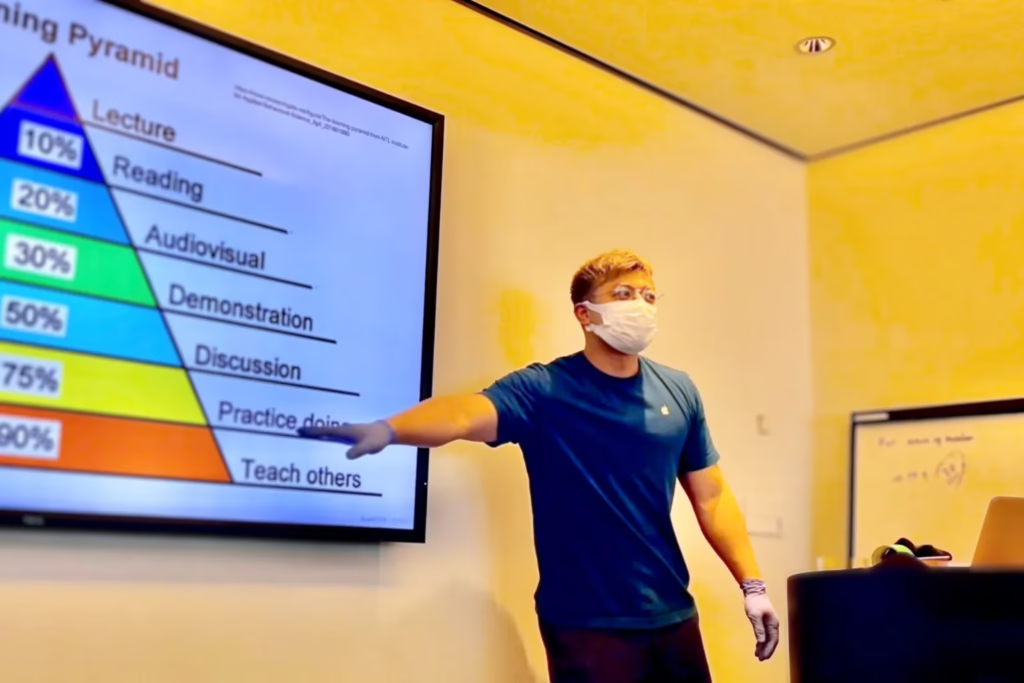
My experience at Apple connects to how we run things today
The origin of this way of thinking lies in
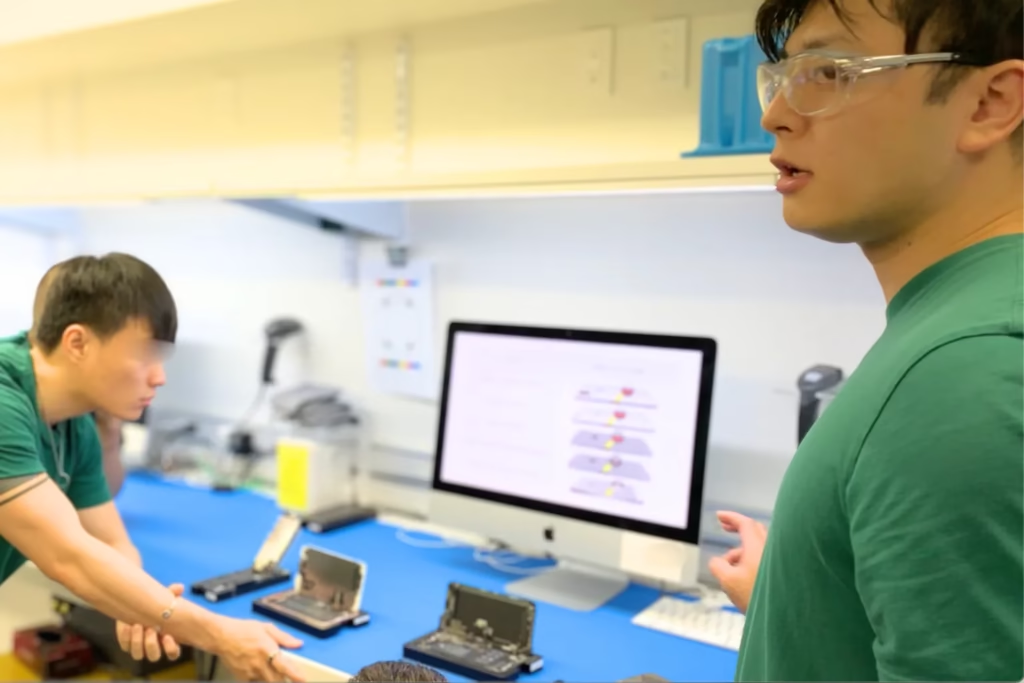
my experience as a Training Lead at Apple.
At that time, I was involved in developing nearly 300 staff.
You cannot develop every staff member by yourself.
That is why what I valued was "building relationships with the leaders on the floor."
Sharing ways of thinking, building dialogue, and rooting a development environment and culture on the floor.
That accumulation supported the whole organization. You can never create Apple Store staff in a single day.
From this experience, I felt strongly.
People are not developed by manuals alone.
They grow when "how you engage with them" and "passion" come across.
I brought this way of thinking straight into after-school time
At Craftsman,
• We value dialogue
• We ask for reasons
• We create time to think
• We let children choose
We build this kind of engagement into daily life.
This is not an ideal; it is a method I learned myself on the floor.
That is why we ask the same attitude of our staff and keep developing them. Of course, the same goes for the children.
The decisive difference from "Kids Club plus lessons"
Many families choose
"Kids Club plus lessons."
.
It is a very realistic choice.
But with that arrangement,
• Information about the child is fragmented between the after-school club and the lessons
Everyone is looking at the child "separately."
✔ No information is shared among them
✔ They don't know the child's daily life
✔ They only see part of the time
→ No one has the "whole picture."
• The adults involved change
Children change their behavior depending on the adult. They do so unconsciously.
✔ Different teaching policies
✔ Inconsistent ways of speaking to them
✔ No unified standards
→ This affects their sense of security and emotional growth
• Growth does not connect
Growth happens through failure → reflection → improvement → trying again
.
For example:
They can't concentrate at cram school
↓
No one digs into the reason
↓
At home they are just scolded
↓
The child loses motivation
This gets repeated. No one acts as a "bridge."
Result:
✔ Harder to improve
✔ Lose confidence
✔ Start to avoid things
At Craftsman, we design the whole after-school time as one flow of learning.
That is why we can continuously support a child's changes.
Summary: After-school time is time that builds the foundation for learning
It may be hard for parents to see, but the after-school environment is important time for building a child's foundation.
• With what kind of adults
• In what kind of engagement
• What kind of time they spend
The accumulation of these leads to the future.
Craftsman is not a place that sells flashy results.
It is a place that quietly and surely grows a child's foundation.
We intend to keep fulfilling that role with care.