What sets children with study habits apart? Asking questions instead of saying "do it"
 bot@flaur.jp
It will soon be six months since our first graders started coming to Craftsman.
At Craftsman, we never order children to "do your homework." We ask things like "Are you done with your studying?" and "What time do you think you can start?", and value children thinking for themselves and getting started on their own.
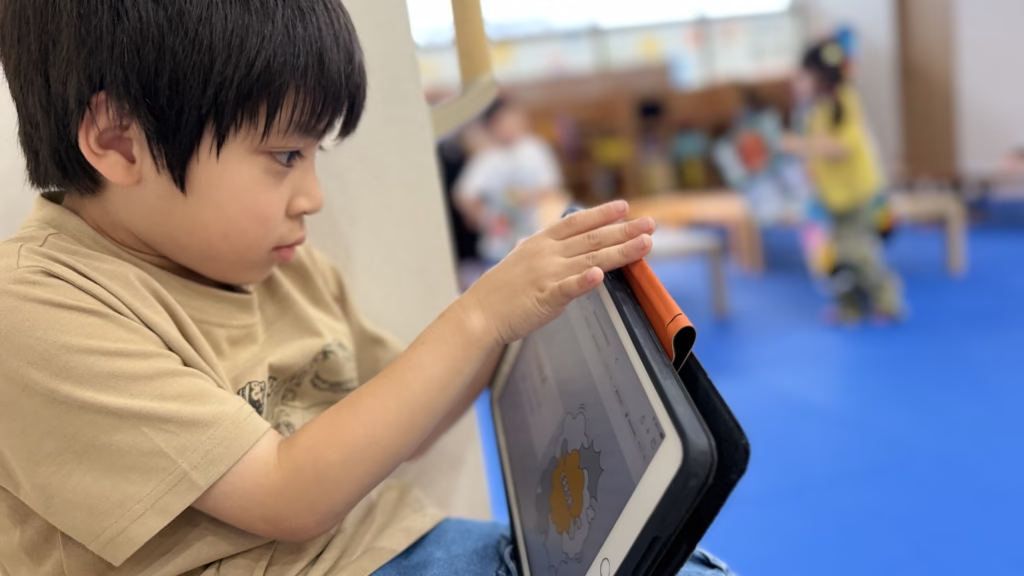
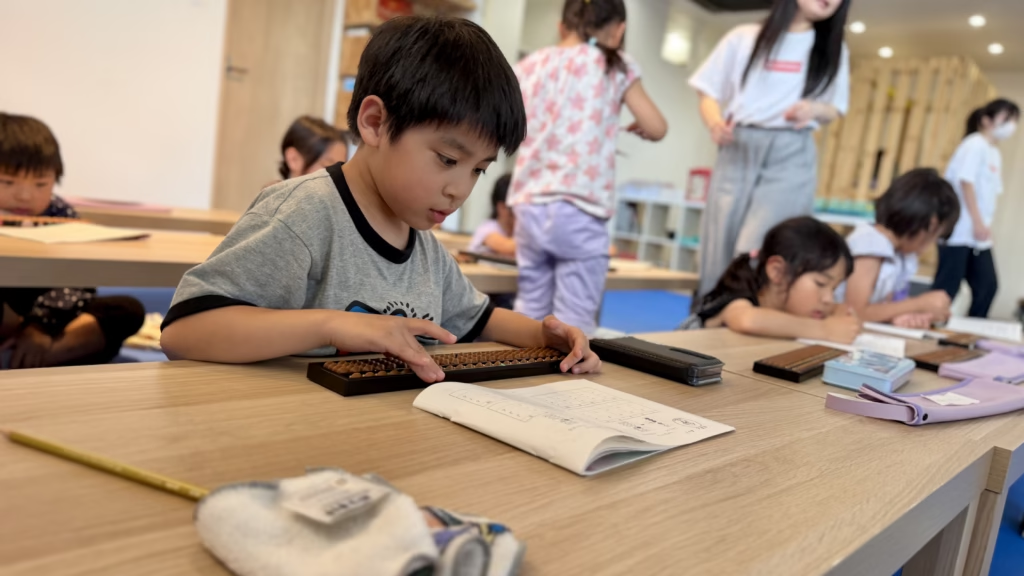
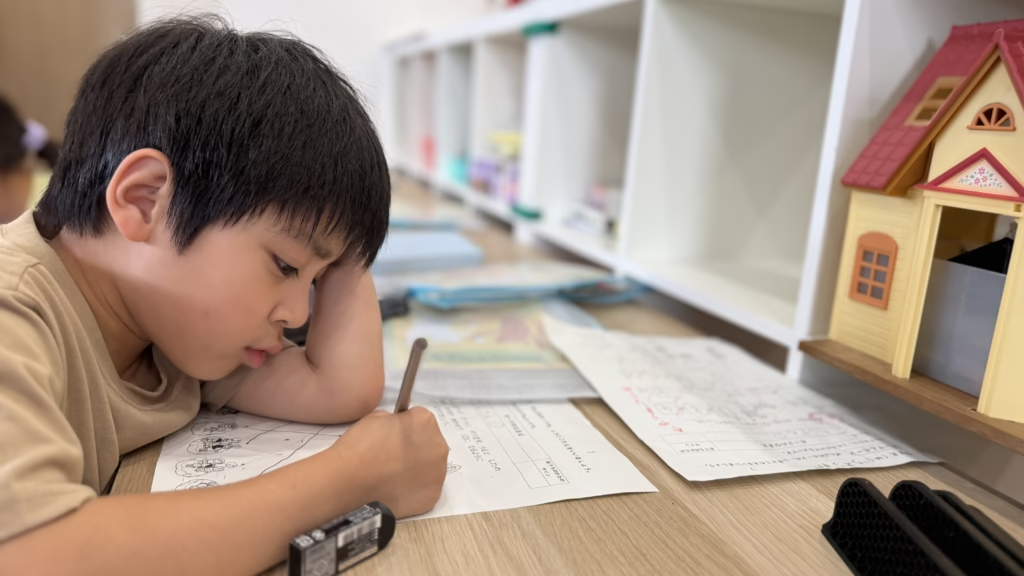
Right after starting school, many children thought only after being asked. But after summer vacation, more children begin studying on their own before anyone says anything.
This is not simply a story about finishing homework faster. It means they are starting to build the ability to be aware of time on their own and choose their next action. It is a small but sure step in the study habits Craftsman values.
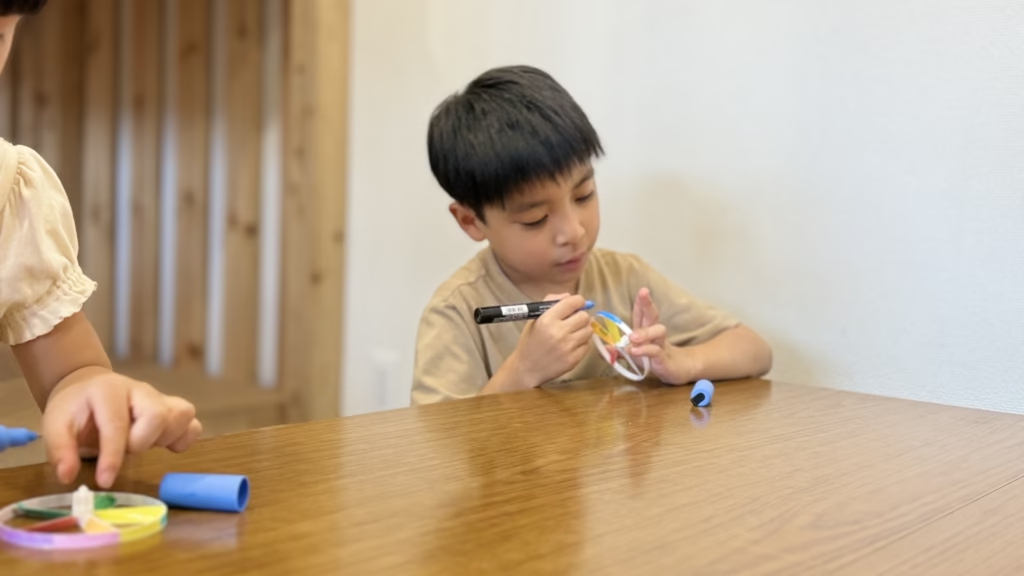
The struggle of having to keep saying "do it"
Have you seen scenes like this at home too?
"Hurry up and do it."
"How many times do I have to tell you?"
Adults can see how the time will play out, so it is tempting to speak up ahead of the child. But when children keep moving only after being told, they may start waiting for "when will I be told" rather than thinking about "what to do." Think of how it goes when getting ready for school in the morning always takes a long time.
Of course, a word from you may get them moving in the moment. But the study habit we aim for is not being moved by adults; it is noticing what needs to be done and starting on their own.
That is why at Craftsman, rather than giving instructions, we choose questions that children can think about for themselves.
Craftsman's questions that build study habits
To a child who hasn't started studying yet, we say something like the following.
"Are you done with your studying yet?"
"What time do you think you can start?"
"Thinking about your plans after this, when do you think is a good time to do it?"
What matters is not leaving them alone on the idea that they don't have to do it.
We share what needs to be done and how the time looks, while leaving the final step to the child. They decide for themselves "I'll start at 4:00" and sit down at their desk at that time. We believe that building up this experience leads to study habits.
They won't always keep their promise from the start. Some days they get absorbed in play or pass the time they set.
"You've passed the time you set."
"If it stays like this, you might not finish before you go home."
"What should we do now?"
"When can you start?"
"It's okay today, but what will you do from next time?"
Together, we check the facts and the consequences that follow from the action.
Not taking away failure by getting ahead of it
I learned the same thing myself when I used to work in the "Genius" position at Apple.
It was when I was training a junior colleague in repairs. Watching their work, there were moments when I could tell, "if you remove screws that far, you might forget to put them back when reassembling," or "you might damage the board."
Inside, I was thinking, "Ah, you shouldn't do that." Even so, as the trainer, I deliberately did not stop them on the spot.
And the junior colleague fails. "Huh, I have a screw left over..."
So what happened as a result?
Because their own judgment and its result became linked, they stopped repeating the same mistake. They were not simply warned about the procedure; they understood "why you shouldn't do that" as their own experience.
Of course, things involving safety and failures that cannot be undone must be stopped by adults. But if we get ahead and prevent even failures that can be redone, the person also loses the chance to learn the link between action and result.
I believe the same is true in how we deal with children.
Precisely because adults know the right answer, they may want to give instructions right away. Even so, in situations where a child can think, choose, and learn from the result, we try waiting a little. And when things don't go well, we don't blame the child; we look back together at the action taken and what happened as a result.
Education is not only about not letting children fail. We believe that creating an environment where they can fail safely and change their next action is also an important kind of education for building study habits and independence.
Talking about actions and their effects, without denying the person
At Craftsman, not only with studying, we think of the child and the action the child took as separate things.
When there is an undesirable action, instead of judging the person with "you're a bad kid" or "you can never do it," we say specifically what happened because of that action.
For example, when a child hurt a friend with harsh words, we don't say "kids who say things like that are bad."
"How do you think Mom would feel if she were told those words?"
"Next time, how could you say it?"
Good actions are the same.
We don't stop at "you're a kind kid" or "good job!" We say, "You noticed they were in trouble and spoke to them, so they felt reassured."
When children understand specifically what was good, they find it easier to choose that action on their own in the next situation too.
What this approach gives to future growth
An approach in which adults don't give too many answers and leave room for children to decide for themselves is called "autonomy-supportive parenting" in psychology.
Long-term studies have reported links between receiving autonomy-supportive treatment in early childhood and later sustained attention, the ability to inhibit behavior, and academic growth. However, the communication style at Craftsman does not determine future outcomes; a child's personality, family, school, and many other environments have an influence.
With that said, day-to-day interactions may lead to growth like the following.
1. The ability to start on their own without waiting for instructions
From "I do it because I was told" to "I do it because I know it's needed." The experience of deciding their own start time is thought to lead to self-management not only in study habits but in daily life as a whole, such as getting ready and tidying up.
2. The ability to not deny themselves even after failing
By talking about actions rather than character, it becomes easier to think "let's change the method this time" instead of "I'm no good because I failed."
Research with young children has also suggested that words that focus on process and action, such as effort and method, rather than words that judge the person themselves, may reduce self-denial after failure and help them recover.
3. The ability to think about the effect their actions have on those around them
With only "I stop because I'll get scolded," a child can't decide for themselves how to act where adults aren't watching.
By repeatedly thinking about who was helped and who was troubled by their actions, they come to understand the reasons for rules and build the ability to choose actions suited to the situation.
4. The ability to leave room to start over, for others and for themselves
When children can think of the person and the action separately, it becomes harder to write off a whole person when a friend fails.
"Something unpleasant was done to me" and "that kid is a nasty kid" are not the same judgment. We believe that knowing this difference becomes a foundation for solving problems through dialogue, even in friendships that will grow more complicated.
Summary: what we want to nurture beyond study habits
What Craftsman aims for is not raising children who silently obey what they are told.
It is noticing what should be done now and acting on their own thinking. When things don't go well, accepting the result and choosing their next action again. And respecting the people around them just as they respect themselves.
The growing number of first graders who start studying without being prompted by a teacher is one change we are seeing along the way in that growth.
Study habits are not completed suddenly one day. They grow by building up experiences such as "today I started on my own" and "I switched gears a little sooner than yesterday."
Craftsman in Kitayamata, Yokohama does not look at children only by whether they could do something or not. While respecting the child, we think together about actions and their effects. We believe those days will one day lead to the ability to make better choices on their own, even without an adult's instructions.
Research referenced
- A longitudinal study on the link between autonomy-supportive treatment in early childhood and executive function and later academic achievement: Bindman, Pomerantz & Roisman, 2015
- A study on the relationship among autonomy support, executive function, and self-regulation from early childhood to adolescence: Khurana et al., 2024
- A study on how praise for the person versus praise for action and process affects reactions after failure: Kamins & Dweck, 1999
*Research results are trends confirmed in groups and do not guarantee the same result for every child.